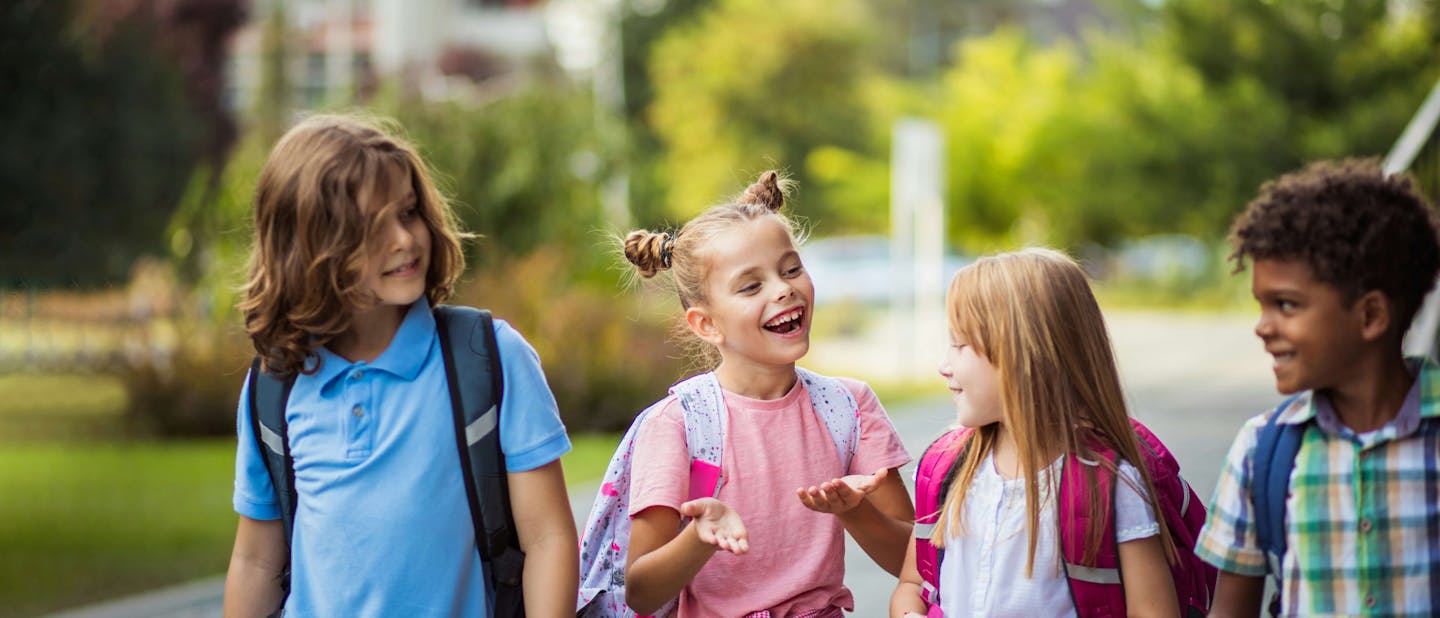
A child comes home from school and tells his parents that a classmate hurt his feelings (by throwing his pencil case on the floor or pushing him). When you ask the child what the reason was, they can’t say anything about it. They didn’t do anything wrong; they don’t know why it happened. Their answer is: “For no reason!” They might add a few words about how that classmate doesn’t know how to behave anyway and picks on everyone. Sound familiar? It’s certainly a very subjective account—too much so for us to naively believe only this version of the story at this point.
The first reason why a child doesn’t recount the event objectively is that they truly experienced it subjectively. “Beauty is in the eye of the beholder,” as the saying goes. Every individual experiences the same situation differently, due to a combination of personality traits, past experiences, values, and beliefs regarding a particular topic or person involved. If we’ve had bad experiences with someone in the past, or if someone has repeatedly told us negative things about that person, we’re more likely to adopt a stance in an ambiguous or conflictual situation that aligns with that negative belief—even if in a very unconscious way (“You’re always… / You never… / everyone knows that you …”), which the person involved naturally perceives as derogatory and humiliating, so they will—logically—respond defensively or aggressively. In this case, for example, instead of resolving the conflict, the students focus on insulting each other. The conflict can escalate to the use of physical force or damage to property.
Another important factor influencing a child’s narrative is the parents’ attitude toward the child’s misbehavior or reactions, and, of course, the consequences (punishments) that result. If parents are very strict and do not tolerate their child doing anything wrong, punishing them severely for mistakes, the child will most likely resort to lying to avoid punishment. In this case, it is necessary to carefully consider which values are more important in your family. Is it really so unacceptable to expect children to learn from their own experiences and mistakes? It is better to focus on ensuring they are able to admit a mistake and find ways to correct it (e.g., a poor grade through extra study, an insult through an apology, damage to someone else’s property by buying a new one, etc.).
People tend to think relatively highly of themselves; we usually even consider ourselves slightly better than the people we compare ourselves to (neighbors, acquaintances, classmates). This phenomenon is known in psychology as the PIP effect (Latin primus inter pares – first among equals); it was researched and substantiated by J. P. Codol (1975). It is not limited to students—peers—but this psychological phenomenon also occurs among adults, regardless of gender, age, occupation, or education
In this way, a person maintains a relatively positive view of themselves—that is, a positive self-image. When we make a mistake and are confronted with it, our self-image can be shaken, or we may worry that others will see us in a less favorable light. Herein lies a third reason why, when a child comes home from school, they typically tell their parents a different version of the story than the one told by the classmate with whom they had a disagreement. Everyone, therefore, “defends” themselves and downplays their responsibility for the problem or conflict in their account. We wouldn’t achieve much by getting angry at the child for lying and insisting that they tell the truth—as a rule, they would only defend themselves even more or start getting tangled up in lies. It is, however, right for us as adults to be aware of this and to assume from the outset that there is another side to the story and certain details we haven’t heard from our own child.
Since we adults are more mature than children, it is right for us to seek out the missing pieces of information before we rush to “defend” our child with all our might. So let’s talk to the other child’s parents, if we know them; let’s go to parent-teacher conferences and ask the teachers, who can give us an objective perspective or another side of the story.
Of course, we cannot expect a teacher to join parents in criticizing another child, their upbringing, behavior, etc. Parents often say: “You only see our Mihc’s mistakes, but what about Janez, who did this and that…” It is important to understand that, due to privacy regulations, a teacher can only discuss their own child with each parent. In this case, they will discuss Janez’s behavior with Janez’s parents, and Miha’s with Miha’s. As parents, you have the opportunity to view the information you receive from the school as a helpful guide in raising your child. After all, raising children well is a shared responsibility and goal of both parents and educational institutions.