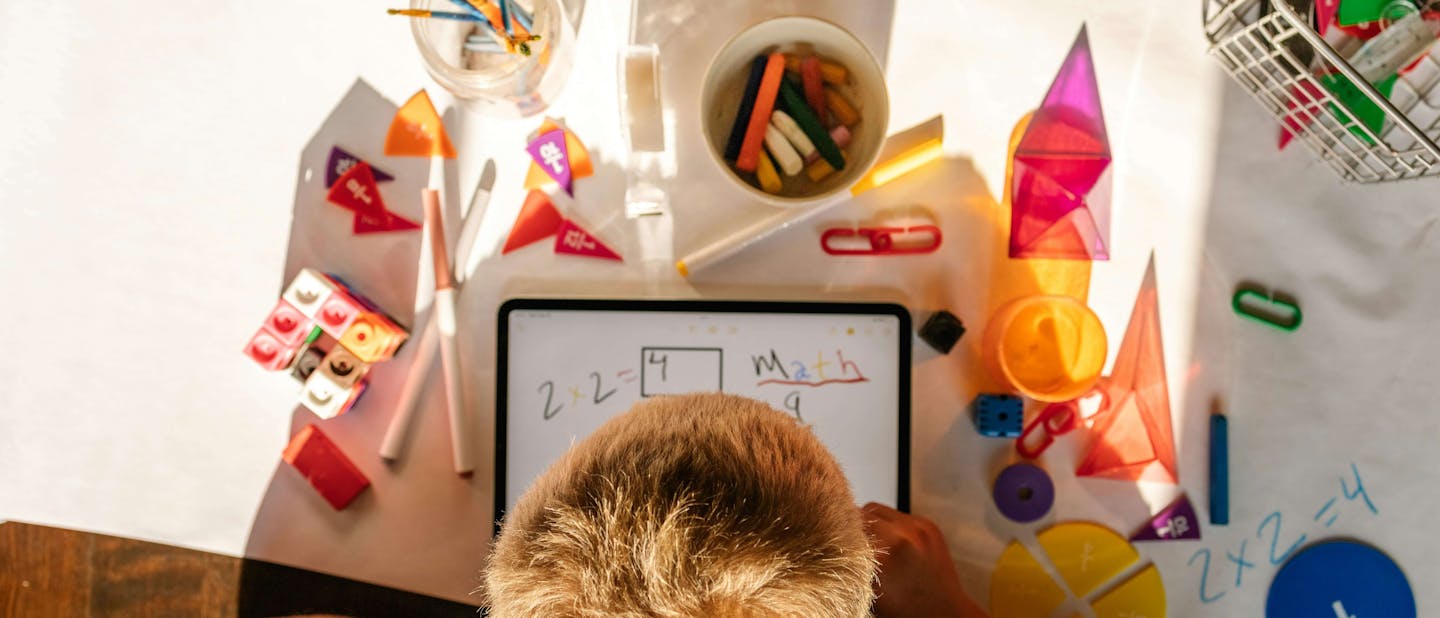
If your child has dyscalculia or you suspect they might have it, you’re probably looking for specific help, effective exercises, and accommodations you can use at home. With dyscalculia, the classic “more practice” approach often doesn’t work. The problem isn’t a lack of effort or motivation, but rather how the child understands and processes numbers. The child doesn’t need more exercises. They need a different way of explaining things.
Numbers must become visible and tangible
For a child with dyscalculia, numbers are often too abstract. When we say “8 + 5,” they cannot clearly visualize it. That is why numbers must become concrete.
Instead of calculating on paper, use blocks, beans, coins, or LEGO bricks. Have the child physically arrange eight objects, then add five more and count them together. Let them see the quantity, let them hold it in their hands. This is one of the most important adaptations for dyscalculia, as it establishes a connection between the number and the actual quantity.
Break tasks down into smaller steps
Longer math problems can quickly overwhelm a child. Instead of: 47 + 38 = ?
First, separate the tens and ones:
First, 40 + 30
Then, 7 + 8
Only then add the results
Color coding also helps. For example, mark the tens with one color (blue) and the ones with another (red). When children see the structure, confusion decreases and their sense of control increases. Visual structure reduces cognitive overload and helps children develop calculation strategies.
Let Math Become Part of Everyday Life
Math shouldn’t just exist in a textbook. When it becomes part of everyday situations, it makes sense to a child.
At the store, a child can calculate on their own how much money they’ll have left after making a purchase. Example: “You have €10, and the item costs €6. How much do you have left?” (have them use coins)
While cooking, you can measure quantities together. Example: “We need 200 g of flour. If we put 100 g in the bowl, how much do we still need?”
On a walk, you can count the steps or the minutes until you get home. Example: “If it’s a 12-minute walk home and we’ve already walked for 5 minutes, how much time do we have left?”
Situations like these are less stressful and allow the child to learn without feeling like they’re being “tested.”
Use visual aids
Children with dyscalculia often remember visual patterns better than numbers alone.
At home, you can:
create a colorful multiplication table
hang up a number line
use colored labels for +, –, ×, ÷
write down “calculation steps” and hang them on the wall
These aids must be always available, not just occasionally. When a child knows they can look at the aid and use it to help themselves, anxiety decreases and independence increases.
Tools Are Not Cheating
Even a calculator or a multiplication table is not a shortcut for children with dyscalculia, but rather a support. If a child understands the process but gets lost in the numbers, a tool helps them demonstrate their knowledge without added stress. The goal is not complete automation, but a functional understanding.
Build self-confidence
Many children with dyscalculia develop an internal belief: “I’m not smart” or “I’m not cut out for math.” In the long run, this can be more harmful than the math difficulty itself.
Therefore:
praise effort, not just results
highlight the child’s strengths and help them become aware of them
avoid comparing them to peers
The child needs to know that difficulties with math do not define their worth.
Insisting on extra practice will not help a child with dyscalculia develop the strategies they need to make progress despite processing numerical information differently. Instead, it is crucial to help them at home with different approaches. With patience, clear steps, visual aids, and accommodations, you as parents can support your child in developing techniques that they can apply to other areas of life. In this way, we also help them build self-confidence, equipping them to face a wider range of challenges.